What Actually Happens to Your Body in an Ice Bath? The Science Explained
Most people know that ice baths are supposed to be good for you. Athletes swear by them. Wellness enthusiasts talk about them endlessly. But when you’re standing on the edge of a cold plunge, heart thumping, staring at water that’s hovering around four degrees what’s actually about to happen inside your body?
The answer is more fascinating than you might expect. In the seconds, minutes, and hours after a cold water immersion, your body undergoes a cascade of physiological responses some immediate and dramatic, some slow and cumulative that together explain why cold plunge therapy has become one of the most talked-about wellness tools of the last decade.
Here’s a science-backed breakdown of exactly what’s going on, from the moment your feet touch the water to the way you feel the next morning.
The First Ten Seconds: The Cold Shock Response
The moment your body enters cold water particularly at temperatures below 12°C your nervous system fires immediately and dramatically. This is called the cold shock response, and it’s automatic, involuntary, and designed to protect you.
In the first ten seconds, you’ll experience a sharp, involuntary gasp followed by rapid, uncontrolled breathing your respiratory rate can jump from a normal 15 breaths per minute to 60 or more in just moments. Your heart rate spikes. Your blood pressure surges. Cutaneous blood vessels near the skin’s surface constrict rapidly as your body begins redirecting blood away from the skin and extremities toward your vital organs.
This is your sympathetic nervous system your fight-or-flight response firing at full intensity. For first-timers, it can feel alarming. For experienced cold plungers, it becomes manageable through controlled breathing, which is why breathing technique is the most important skill to develop when you’re starting out.
The cold shock response is most intense in the first 30 seconds. The discomfort you feel in those first moments is not an indication of danger — it’s your nervous system doing exactly what it was designed to do.
30 Seconds to 3 Minutes: Vasoconstriction and the Hormonal Cascade
As you stay in the water and your breathing begins to slow, something remarkable starts happening across your entire body.
Vasoconstriction the narrowing of blood vessels intensifies throughout your peripheral circulation. The blood that was supplying your muscles, skin, and limbs is being redirected to your core, protecting your vital organs. This is why cold water immersion is so effective at reducing localised inflammation: the reduced blood flow to peripheral tissues significantly decreases the delivery of inflammatory mediators to damaged areas.
Simultaneously, your adrenal glands are producing a surge of noradrenaline (norepinephrine) a neurotransmitter and hormone that plays a central role in attention, focus, mood, and energy. Research from Dr Susanna Søberg and others in the field of cold water therapy has shown that cold water immersion at temperatures of 14°C and below can increase noradrenaline levels by 200-300 percent. This is the neurochemical mechanism behind the intense mental clarity and focus that regular cold plungers consistently report.
Alongside noradrenaline, your brain is releasing endorphins your body’s natural pain-relieving and mood-elevating chemicals. Dopamine levels also begin to rise. A 2000 study found that cold water immersion increased plasma dopamine concentrations by approximately 250 percent, with the effect lasting for several hours after the session. This is not a fleeting buzz it’s a sustained, measurable elevation in one of the brain’s most important reward chemicals.
After 3 Minutes: Adaptation and the Shifting Experience
If you’ve stayed in the water beyond the first few minutes which at 3–12°C (the temperature we maintain our cold plunge ice baths at Relax Recover) represents a meaningful achievement your body begins to adapt.
The cold shock response has settled. Breathing has normalised. Many experienced cold plungers describe this phase as a kind of stillness an almost meditative calm that arrives after the initial intensity. Your heart rate, though still elevated, has stabilised. The profound discomfort of the first minute has become something closer to intense sensation.
What’s happening physiologically is a gradual process of peripheral cooling. Your skin and superficial muscle tissue are losing heat. Your core temperature, however, remains protected your body is remarkably effective at maintaining core warmth even in very cold water, provided the exposure is of reasonable duration.
When You Get Out: The Rewarming Response and the Afterglow
The moments immediately after you exit the cold water are, for many people, the most extraordinary part of the whole experience.
As your body begins to rewarm, vasodilation occurs the blood vessels that constricted during immersion now open rapidly. Warm, oxygenated blood floods back into your peripheral tissues. The metabolic processes that were slowed by the cold re-accelerate. Many people describe a feeling of intense warmth, tingling, and aliveness that spreads across the body within two to three minutes of exiting.
This is not your imagination it’s real physiology. The return of circulation to cooled tissue creates a sensation that is genuinely distinctive and difficult to describe to someone who hasn’t experienced it. Regular cold plungers refer to it simply as ‘the afterglow’, and it’s one of the primary reasons people become habitual cold water users.
Crucially, the elevated noradrenaline and dopamine levels that began rising during immersion continue to rise and remain elevated for hours after you get out. The subjective experience mental sharpness, elevated mood, a sense of calm confidence is a direct result of this sustained neurochemical response.
Research suggests that cold water immersion can elevate dopamine levels by up to 250% — and that this effect persists for several hours after the session. The feeling of wellbeing you experience after an ice bath is not psychological. It’s chemical.
The Hours After: Anti-Inflammatory Effects and Recovery
In the hours following a cold plunge session, the anti-inflammatory effects that began during immersion continue to develop. The vasoconstriction of peripheral blood vessels during the session, followed by the vasodilation of rewarming, creates a pumping effect on the circulatory system driving metabolic waste products out of muscle tissue and delivering fresh oxygenated blood in their place.
For athletes and active individuals, this is where cold water immersion earns its reputation as a recovery tool. Studies on cold water immersion in athletic recovery contexts consistently show reductions in markers of muscle damage particularly creatine kinase and decreases in perceived soreness in the 24-72 hours following strenuous exercise.
For those using cold plunge for general wellness rather than athletic recovery, the anti-inflammatory benefit manifests differently: many regular users report improvements in joint comfort, reduced chronic tension, and a general sense of physical ease in the day or two following a session.
What Happens With Regular Sessions: Cumulative Benefits
Perhaps the most compelling aspect of cold water immersion science is what happens when you make it a regular practice.
Repeated cold water exposure leads to adaptation at multiple levels. The cold shock response becomes progressively less intense your breathing normalises faster, your heart rate spike diminishes, and your ability to remain calm during the initial immersion improves significantly. This is a genuine physiological adaptation, not just psychological toughening.
Research on habitual cold water swimmers shows meaningful improvements in cardiovascular efficiency, reduced baseline levels of inflammatory markers, and enhanced mood regulation over time. There is also growing evidence that regular cold exposure activates brown adipose tissue a type of fat that burns energy to generate heat which has implications for metabolic health and weight management.
The psychological benefits of regular practice are equally well-documented. The repeated experience of choosing discomfort, breathing through an intense physical sensation, and emerging composed on the other side has measurable effects on stress resilience, emotional regulation, and confidence that extend well beyond the ice bath itself.
How This Translates to a Session at Relax Recover
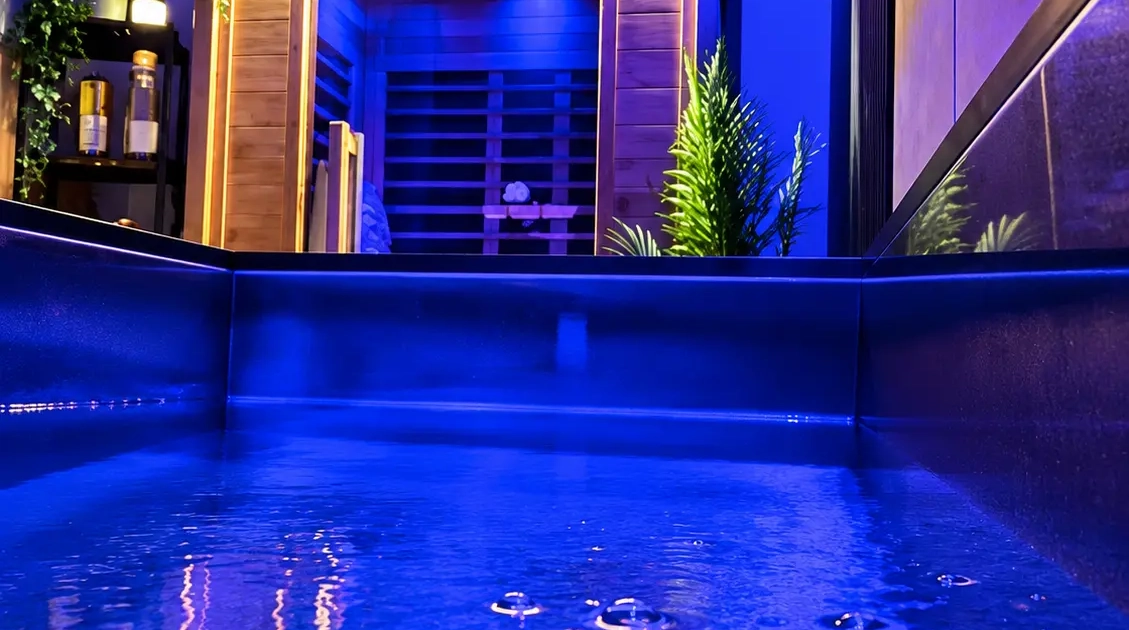
Our cold plunge ice baths at Relax Recover are maintained between 3-12°C — temperatures at which all of the above physiological responses are fully engaged. Unlike outdoor natural swimming, our cold plunge is consistent in temperature year-round, immediately available, and completely private which makes a significant difference for first-timers who want to have the experience without a public audience.
Ready to experience it for yourself? Every private suite at Relax Recover includes a cold plunge maintained between 3-12°C available for your full session, in complete privacy, with no communal spaces. We’re 25 minutes from Bath and 20 minutes from Chippenham.
 Relax Recover